Explore PartnerPepTalks
PartnerPepTalks begin in your head and ripple outward, strengthening all types of relationships along the way – interpersonal, multidisciplinary, community.
Best time to talk? Before you think you’re ready! Whether you’re hoping to start (or expand) your family someday, supporting someone who is, or working in health or education, these PartnerPepTalks make space for reflection, connection, and preparation for the future. We advocate for at least 3-6 months of preconception planning during major windows of sperm and egg development for individuals of reproductive capability, Everyone’s timeline is a little different, and our original resources help flag where to focus support.
Want more like this?:
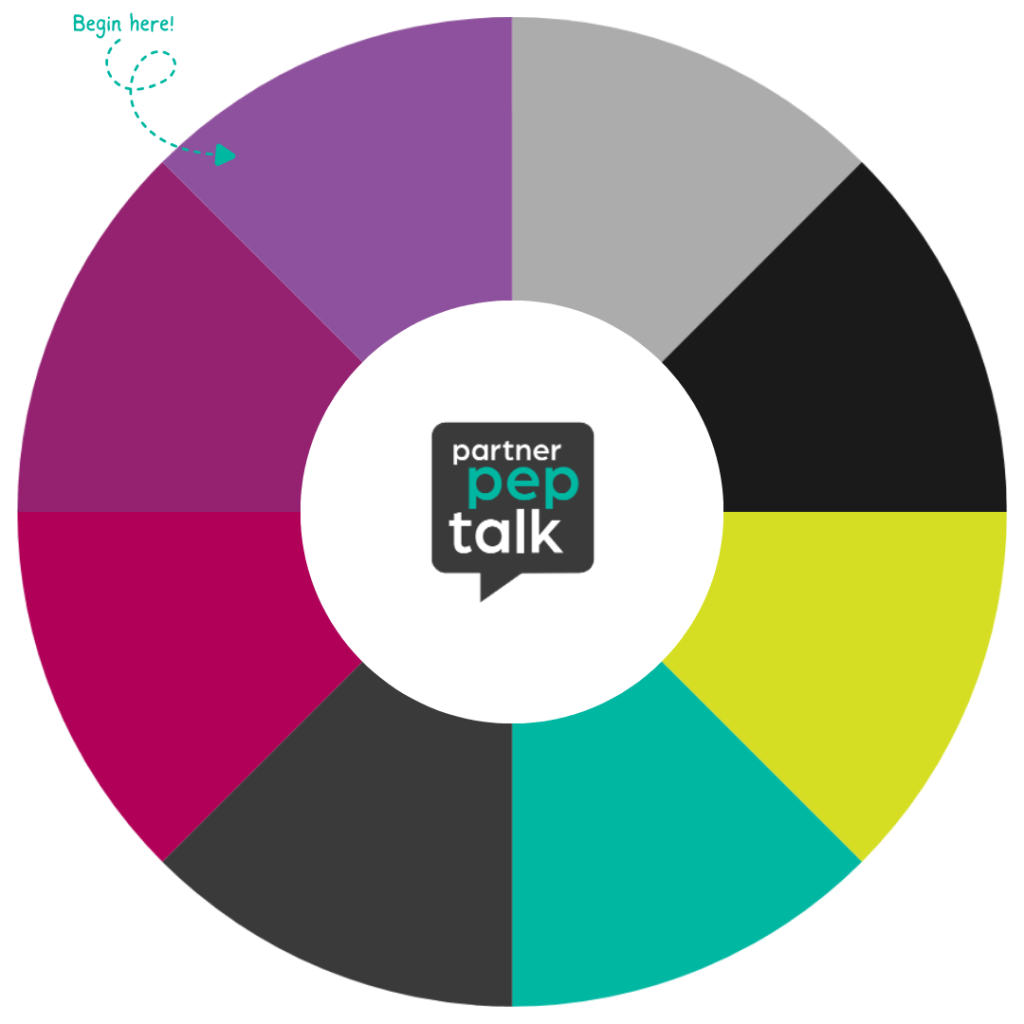
Unlock Full Resource LibraryAccess the full Resource Library for all downloadsPick your top 3 PartnerPepTalks to strengthen your health or future conversations with a partner using the interactive chart below – or – download the printable companion guide.

Start With Yourself
What does your reproductive life plan look like now? Has it changed over time? From puberty onward, everyone deserves age-appropriate conversations that reflect their identity, values, and choices. Whether you’re planning to conceive, still undecided, or navigating fertility with a donor or partner, your internal pep talk sets the tone for all the rest.
Primary Care / Specialist Team
Let your providers know your intentions early. From family planning to chronic condition management, the sooner you bring it up, the better supported you’ll be.
Include Your Health Providers
No single clinician can handle every aspect of preconception health, and not every healthcare provider will be comfortable bringing up preconception planning strategies. You may need to bring it up. Evidence-based PartnerPepTalk resources aim to make everyone more comfortable and confident with these conversations. Referrals and follow-up may need to happen too, because current insurance reimbursement structures may be limiting.
Tip: Share your goals with your healthcare provider at every life stage, no matter your sexual or gender identity. Preconception health and a supportive environment benefit everyone, not just the person who may become pregnant.
Mental Health Professionals
Mental wellness supports generational resilience. That goes for both future moms and future dads. Trauma-informed, preconception mental health care is part of the full picture.
Dentist / Hygienist
Oral health can affect pregnancy outcomes. Silent infections like gingivitis are transferable, and preconception check-ups for both partners are key. The dental office is an ideal setting to get blood pressure measured, too. Bring this up at your next visit.
Talk With Your Partner
Whether your relationship is casual or committed, it’s empowering and necessary to be clear on your shared intentions. Talk before the moment. Make a plan for how you’ll approach pregnancy, or prevent it altogether. Revisit the conversation regularly, especially if you’re open to the idea of having unprotected sex. And don’t forget to schedule check-ups for at least 3 to 6 months in advance!
Start With Yourself
What does your reproductive life plan look like now? Has it changed over time? From puberty onward, everyone deserves age-appropriate conversations that reflect their identity, values, and choices. Whether you’re planning to conceive, still undecided, or navigating fertility with a donor or partner, your internal pep talk sets the tone for all the rest.
Pharmacist
Instead of saying “no” to the “Consultation with a Pharmacist,” say “yes” the next time you pick up your prescription medication for yourself or your intimate partner. Teamwork is really important when it comes to medication management and family planning. Abrupt changes without medical supervision can do way more harm than good, so if your healthcare provider or pharmacist routinely asks about your reproductive intentions or contraception, take no offense. Proactive care shows professionalism.
Medical Providers – General & Specialty Care
No single clinician can handle every aspect of preconception health, and not every healthcare provider will be comfortable bringing up preconception planning strategies. You may need to bring it up. Evidence-based PartnerPepTalk resources aim to make everyone more comfortable and confident with these conversations. Referrals and follow-up may need to happen too, because current insurance reimbursement structures may be limiting.
Tip: Share your goals with your healthcare provider at every life stage, no matter your sexual or gender identity. Preconception health and a supportive environment benefit everyone, not just the person who may become pregnant.
Mental Health Professionals
Mental wellness supports generational resilience. That goes for both future moms and future dads. Trauma-informed, preconception mental health care is part of the full picture.
Dentist / Hygienist
Oral health can affect pregnancy outcomes. Silent infections like gingivitis are transferable, and preconception check-ups for both partners are key. The dental office is an ideal setting to get blood pressure measured, too. Bring this up at your next visit.
Talk With Your Partner
Whether your relationship is casual or committed, it’s empowering and necessary to be clear on your shared intentions. Talk before the moment. Make a plan for how you’ll approach pregnancy, or prevent it altogether. Revisit the conversation regularly, especially if you’re open to the idea of having unprotected sex. And don’t forget to schedule check-ups for at least 3 to 6 months in advance!
Food & Drink, Physical Activity & Sleep
A rich variety of wholesome foods can help protect the body’s own protective barriers—like the gastrointestinal tract—while supporting overall vitality. Pair this with regular movement and restorative sleep to fuel mind-body health and the quality of sperm and seminal fluid, eggs, and uterine lining. Resist the temptation to overdo one lifestyle habit at the expense of the others—most people, including spouses, partners, family, friends, and even co-workers, wrestle with this balance, and “perfect imperfection” is a good low-stress goal. RDNs (Registered Dietitian Nutritionists), sleep apnea specialists, and credentialed exercise specialists may all prove invaluable, especially if you’re living with a chronic medical condition.
Pain Management, Substance Use, Infection Management
- Pain Management with Opioids: Social media, music, and entertainment have blurred lines between legal opioid prescription and recreational opioid use, creating false safety perceptions and is of particular concern during the months before and after conception. Work closely with your prescribing physician to review whether continued opioid use is necessary, and explore safer options. Physical therapists, occupational therapists, psychologists, and complementary care specialists are also sources of support.
- Nicotine, Alcohol, Cannabis & Other Drugs: A strong legacy of resiliency begins with both partners practicing healthier habits before family building. Acknowledge that social circles and partners have tremendous influence on each other. Binge or chronic substance use? Trouble cutting back or quitting? Recognize situations that are working in your best interest and those that aren’t. Professional guidance may offer added security, ensuring you don’t have to carry burdens alone. We are working with collaborators to feature resources and screening tools for Substance Use Counselors, Mental Health Specialists, Licensed Clinical Social Workers, Care Coordinators and Crisis Interventionists.
- Infectious Disease &/or Sexual Health: Be open to updating vaccinations (see Preconception Medical Checklists) as well as testing and treatment for common sexually transmitted infections (STI). Most people don’t realize that even if an oral or genital infection has no symptoms, it can affect fertility, future pregnancy safety, and more. It’s critical to complete treatment as instructed and prevent reinfection by having both partners equally responsible for follow-up.
Remember: no two PartnerPepTalks are alike. And they’re not one-and-done. PartnerPepTalks are conversations that evolve over time as your relationships, goals, and circumstances change. So start where you are, and revisit as often as needed.
Case Study
Meet Jason & Natalie
Evidence supports pre-pregnancy health as a shared opportunity. Learn how Jason and Natalie’s PartnerPepTalk went down.
“PartnerPepTalk resources helped us open up and talk more about our shared intentions and strengths. They also supported us in identifying three things to prioritize next.”


I want to prioritize:
- Make a dentist appointment- I hadn’t felt any reason to go, but now I do.
- Get a medical check-up & mention that we want to start a family within the year.
- My mental health and healthy coping – for my own well-being and for us as a couple.

I want to prioritize:
- Good sleep habits and complete the Home Sleep Apnea Test (HSAT) that was ordered at my recent well-woman check-up.
- Be consistent with yoga class and walking with friends.
- Daily multivitamin-mineral supplement (with 400-800mcg folic acid and 150mcg iodine) + more healthy meal planning over the weekends together.